The South Asian Wedding Venue Checklist: What to Ask Before You Book
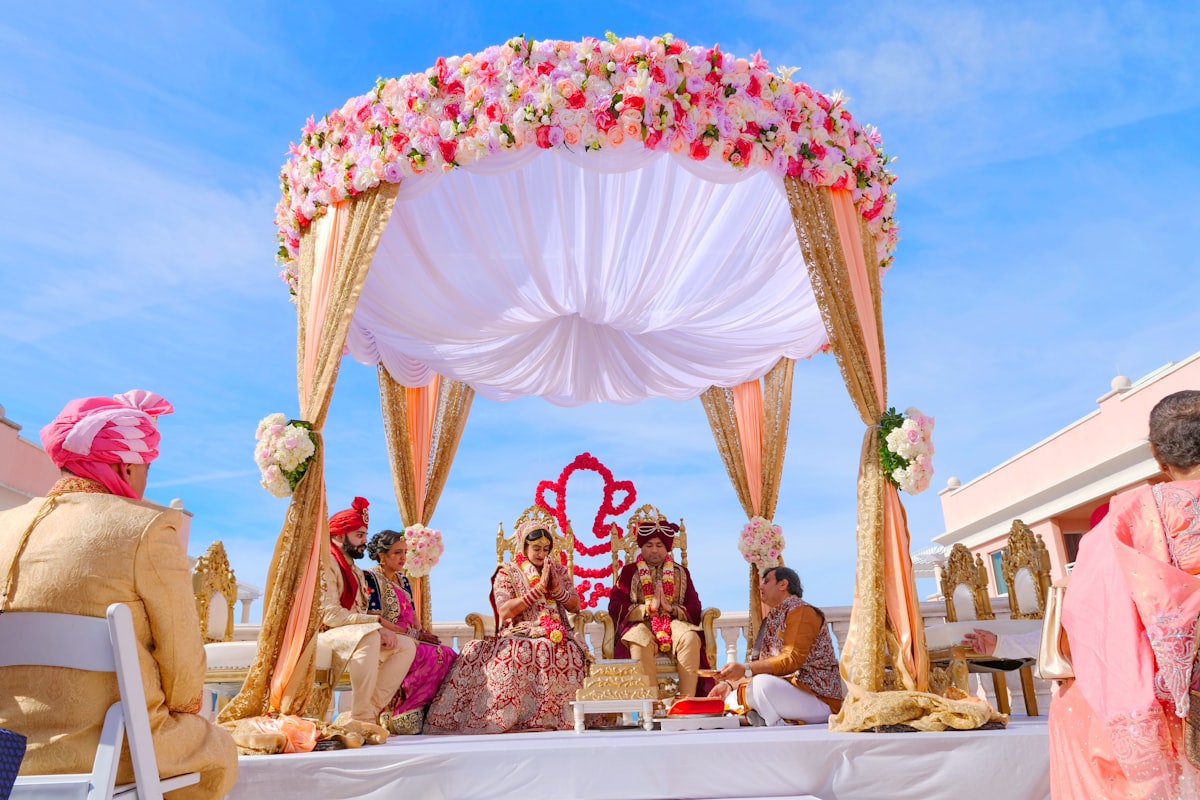
You found the venue. The ballroom is gorgeous. The grounds are picture-perfect. The coordinator is lovely. You're ready to sign.
And then you ask about the havan, and everything gets awkward.
Here's what nobody warns you about: most venue packages, checklists, and "questions to ask" guides floating around online were written for a standard Western wedding. One ceremony, one reception, done by 10 PM. That's a completely different animal from what you're planning.
A South Asian wedding might span two to four days. You might need a fire ritual indoors. Your guest list might be 300 people (minimum). You almost certainly need an outside caterer who knows their way around a tandoor. And you might be arriving on a horse.
So before you fall in love with a venue and put down a deposit, here's the checklist of questions that actually matter for your celebration. Print this out. Bring it to every tour. It'll save you from some very expensive surprises.
Why You Need a Different Set of Questions#
Standard venue walkthroughs cover the basics: capacity, pricing tiers, available dates. But South Asian weddings have requirements that most venues have never thought about. Fire ceremonies. Multi-day access. Outside catering with serious kitchen needs. A baraat procession route. Late-night sound for the sangeet.
If the venue hasn't hosted a South Asian wedding before, that's not automatically a dealbreaker — but it means you need to be extra thorough. You're essentially educating them on what your celebration involves, and you need to know upfront whether they can accommodate it or whether you'll be fighting restrictions the whole way through.
If you're still figuring out which events you'll actually be hosting, our guide to South Asian wedding events breaks down the full lineup so you can plan your venue needs accordingly.
The Checklist#
Ceremony Requirements#
These are the questions that trip people up most often. Your wedding ceremony likely involves traditions that standard venues aren't set up for.
Fire and havan:
- Does the venue allow open flames indoors? What about a contained sacred fire (agni/havan)?
- Is a fire permit required? If so, who obtains it — you or the venue?
- Will the venue require a fire marshal or fire watch on-site? (Many do, and they'll charge you for it.)
- Can the fire alarm system be temporarily placed on bypass for the ceremony? Who coordinates that?
- Are there sprinkler systems directly above the ceremony space that could be triggered by smoke?
Mandap and ceremony space:
- What's the ceiling height in the ceremony space? Standard mandaps start around 8x8x8 feet; most ballroom mandaps land at 10x10 or 12x12, and elaborate four-pillar builds can reach 14×14 or 16×16 feet on a raised stage, per Shaadi Shop's mandap guide. You need at least 2-3 feet of ceiling clearance above the mandap canopy.
- Can the mandap be placed on a raised platform or stage? Is the floor strong enough?
- Is there at least 6 feet of clearance between the mandap and the first row of guest seating? Your photo and video teams need that space.
- Does the venue allow you to bring in your own mandap, or do they require you to use their inventory?
Outdoor options:
- Is there an outdoor space for events like mehndi or haldi?
- What's the rain plan? Can you move an outdoor ceremony indoors on short notice?
- Are there power outlets and lighting available in outdoor areas for evening events?
Ask the venue coordinator directly: "Have you hosted a Hindu, Sikh, or Muslim wedding before?" If yes, ask for photos and a reference from that couple. If no, gauge their openness. The best venues are the ones willing to learn and accommodate, even if they haven't done it before.
Multi-Day Logistics#
This is where things get complicated fast. If you're planning a mehndi, sangeet, ceremony, and reception across multiple days, you need a venue that can handle the transitions — or you need to book multiple spaces.
- How many consecutive days can you book the venue? Is there a multi-day discount?
- What are the setup and teardown windows between events? (A 2-hour flip between sangeet and ceremony decor is tight. Ask what's realistic.)
- Can decor stay up overnight between events, or does everything need to come down each night?
- Is there a dedicated space for each event, or will the same room be reconfigured?
- What are the earliest setup and latest departure times each day?
- Is there overnight access for vendors who need to prep for the next day's event?
For a deeper look at budgeting across multi-day events, our South Asian wedding cost breakdown has the numbers.
Catering#
Food is non-negotiable. Your guests are going to remember the food, and you need a caterer who can deliver the cuisine your family expects. That almost always means an outside caterer.
- Does the venue allow outside catering? (This is the single most common dealbreaker for SA weddings, per Shaadi Shop's venue guide.)
- If outside catering is allowed, is there a buyout fee or kitchen rental charge?
- Does the venue's kitchen have the capacity for large-scale Indian food service — including tandoor ovens, high-BTU burners, and proper ventilation?
- Can the caterer do a full kitchen walkthrough before you commit?
- Is there space for a live cooking station or chaat counter in the reception area?
- Are there any restrictions on cooking methods (open flame, deep frying) in the kitchen?
- How does the venue handle buffet-style vs. family-style vs. plated service? What are the layout options for a buffet serving 300+?
- Where will food trucks park if you're doing a late-night food truck for the sangeet?
- Can the kitchen accommodate strictly vegetarian or Jain prep (no onion/garlic, no root vegetables, no shared surfaces with meat)? For halal, can the caterer source and prep meat separately on-site?
- Is there a separate vegetarian-only serving line for guests who require it?
Some venues technically allow outside catering but only from a short "preferred vendor" list — and there may be zero South Asian caterers on it. Others charge an outside catering fee or kitchen rental on top of your catering costs — anywhere from a few hundred dollars at smaller banquet halls to $5,000-$15,000 at upscale ballroom hotels in major metros. Ask for the specific preferred-vendor list and the exact fee structure in writing before you get excited about "outside catering allowed."
Sound and Entertainment#
Your sangeet needs a proper sound system. Your DJ or band needs to go loud. And your guests are going to dance late. All of which can clash with local noise ordinances.
- What are the local noise ordinance hours? Cutoffs typically fall between 10 PM and 11 PM in residential zones, per the Cheers Entertainment noise guide, but they vary widely — some suburbs cut at 9 PM, some urban districts allow until midnight. Know the exact time for the venue's specific address, not just the city.
- Does the venue have an earlier curfew than the city requires? (Some do, especially those in residential neighborhoods.)
- Are there decibel limits?
- Can you bring your own sound equipment, or must you use the house system?
- Is there a separate space for the sangeet that has better sound isolation?
- If you're doing an outdoor sangeet or garba, are there noise complaint procedures that could shut things down mid-event?
- Does the venue allow a live dhol player for the baraat? Where can they play?
Decor and Setup#
South Asian wedding decor is not a few centerpieces and some fairy lights. It's mandap construction, draping, floral installations, and sometimes structural builds.
- Does the venue allow structural installations (mandap framework, ceiling draping, pipe-and-drape walls)?
- Are there restrictions on attaching anything to the walls or ceiling? (No nails, no hooks, no adhesive can limit your decorator significantly.)
- What are the ceiling heights throughout all event spaces?
- Is there a loading dock or freight elevator for bringing in large decor pieces?
- Does the venue allow real candles, diyas, or are only flameless options permitted?
- Can the decorator access the space the day before for setup?
- How many dressing rooms or getting-ready suites are available? You typically need at least two (bride's side, groom's side), and for multi-day events, can the same suite be reserved across all days so families don't have to relocate outfits and jewelry every morning?
- Is there a private suite for elderly family members who need a quiet space during long ceremonies?
Alcohol and bar service:
- Is the bar in-house only, or can you bring outside alcohol with a corkage fee?
- For dry events (some Muslim, Jain, or observant Hindu families): can the bar be closed entirely for one event and open for another on the same weekend?
- Is there a separate non-alcoholic mocktail station option for guests who don't drink?
Guest Capacity#
Your guest count for a South Asian wedding isn't just one number. It shifts depending on the event format.
- What's the maximum seated dinner capacity? (This is your ceremony and reception number.)
- What's the standing/cocktail capacity? (Relevant for sangeet and garba.)
- Does the venue quote capacity with or without a dance floor? A 300-person capacity room becomes a 220-person room once you add a dance floor and mandap stage.
- Is there a separate cocktail hour space so the main room can be flipped?
- Can different rooms accommodate different events simultaneously (e.g., mehndi in the garden while reception prep happens in the ballroom)?
According to The Knot's 2026 Real Weddings Study (10,474 US couples married in 2025), the average wedding in the US costs $34,200, with venues running anywhere from $8,000 (space only) to $22,000 (including catering, alcohol, and rentals). For a large South Asian wedding with 300+ guests and multi-day access, expect to pay well above that average — particularly in metro areas like the NY/NJ corridor, Bay Area, or Dallas-Houston.
Parking, Access, and the Baraat#
The baraat is one of the most joyful parts of a South Asian wedding — and one of the trickiest logistically. You need a route, you might need a horse, and you definitely need to not block traffic.
- Is there a clear route for the baraat procession? How long is it? (30 minutes to an hour of walking and dancing is standard, according to Regetis Photography's baraat guide.)
- Does the venue allow horses, horse-drawn carriages, or decorated cars on the property?
- Are there any local permits required for an animal on-site?
- Where does the baraat end and the milni/garland exchange take place? Is there a covered area?
- Is there shade and water available for the horse and handler?
- How much parking is available? For a 300-guest wedding, you need serious parking capacity or a shuttle/valet plan.
- Is there accessible guest drop-off near the entrance for elderly family members?
- How close are the nearest hotels for out-of-town guests?
If you're coordinating vendors across multiple days, our guide to choosing vendors for multi-day weddings covers how to keep everything aligned.
Red Flags to Watch For#
Not every venue is being dishonest when they say "we've done Indian weddings before." But here are signs a venue might not be the right fit:
-
They hesitate on the fire question. If the coordinator doesn't know the venue's fire policy off the top of their head, or says "we'll figure it out," that's a red flag. Fire permits and alarm bypass protocols take coordination with the local fire marshal. This isn't something you figure out the week before.
-
"Outside catering is allowed" but the fee is astronomical. A buyout fee of $10,000+ essentially means they don't want you bringing your own caterer. Ask for the number early.
-
They can't tell you the noise curfew. If the venue doesn't know their own noise restrictions, you'll find out the hard way — when your sangeet gets shut down at 9:30 PM.
-
No multi-day pricing structure. A venue that only offers single-day bookings and won't negotiate a multi-day rate isn't set up for what you need. You'll end up paying full price for each day, which adds up fast.
-
They push back on your decor team's timeline. If the venue insists on a 4-hour setup window for a full mandap build, draping, and floral installation, they don't understand the scope of South Asian wedding decor. Most decorators need a full day, minimum.
-
No references from previous SA wedding couples. Not having hosted one before is fine. Not being willing to connect you with any references, or not being open to learning about your traditions, is a problem.
Budget Considerations#
Venue costs vary wildly by region and what's included. Here's what the data says:
According to The Knot's 2026 Real Weddings Study, the average US wedding costs $34,200 total, with venues accounting for roughly 30-40% of the budget when catering and bar are included. The average venue-only fee sits around $8,000 to $12,000, but that figure assumes an average-sized guest list.
For a South Asian wedding, your venue budget is almost certainly higher than average, for a few reasons:
- Guest count. 300+ guests at $290-300 per guest (the national per-guest average per Zola's 2026 cost guide) adds up fast.
- Multi-day access. You're paying for two to four days of venue time, not one.
- Outside catering fees. The buyout or kitchen rental alone can be a significant line item.
- Extended hours. Sangeet nights run late, morning ceremonies start early. Overtime charges apply at many venues.
Popular venues book 12-18 months out, according to Zola's venue-booking guide and multiple industry sources. For South Asian weddings on auspicious dates (which many families require), that window gets even tighter since multiple couples are targeting the same handful of weekends. Start venue shopping as soon as your dates are set.
The Bottom Line#
Finding the right venue for a South Asian wedding takes more legwork than the average wedding search. But asking the right questions upfront — about fire, food, sound, space, and multi-day logistics — will save you from the nightmare scenario of discovering a dealbreaker after you've already signed the contract and put down a deposit.
Bring this checklist to every venue tour. Take notes. Compare answers side by side. And trust your gut: if a venue seems reluctant about your traditions rather than curious and accommodating, it's not the right fit, no matter how pretty the ballroom is.
Your wedding deserves a venue that's as ready for the celebration as you are.
Ready to simplify your wedding planning?
Anvaya is built for South Asian weddings — manage every event, every guest, and every vendor in one place.
Get Started Free